
Container Management Software – Digitally Manage Inventory, Locations, and Movements
Where are your containers located? Which ones have been delivered to customers, which ones have been returned, and which ones are currently unavailable?
With logistocat's container management solution, you can manage containers, load carriers, and other logistics assets centrally and with full traceability. Inventory levels, locations, status changes, and all documented container movements remain clear and traceable at all times.
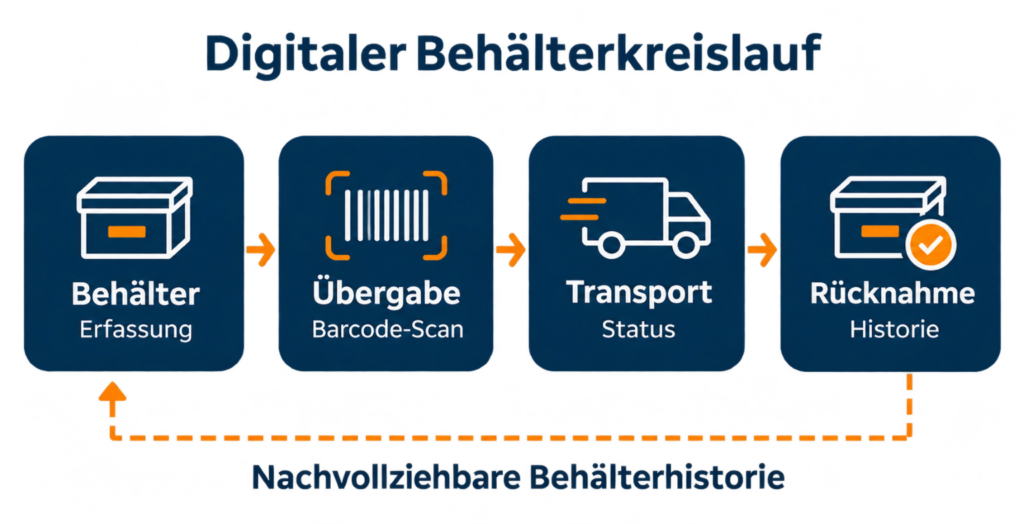
- Keep track of container inventory and availability at all times
- Track locations and documented container movements
- Digitally Record Transfers, Returns, and Status Changes
- Specifically exclude damaged or locked containers from use
When container inventories and locations are no longer transparent
In many companies, containers and load carriers are moved daily between warehouses, vehicles, and customers. If handoffs, returns, and status changes are not consistently documented, information gaps arise.
The consequences are additional effort required to reconcile inventory, unclear inventory levels, and a lack of transparency regarding the location of individual containers.
Container Locations Unclear
Where is each container located? Without up-to-date location information, employees often have to call to ask or search for the information manually.
Unclear Customer Lists
Which containers are available—at the customer's location or in transit? Inconsistent lists and incomplete bookings make it difficult to maintain a reliable inventory overview.
Inconsistent Inventories
When was a container handed over or returned? If there are no clear records, it can be difficult to trace individual movements later on.
Damaged Containers in Circulation
If damage is not reliably recorded, defective containers may be reused. This results in additional work and avoidable disruptions.
Digitally Track Container Movements and Ensure Complete Traceability
With logistocat's container management system, container movements are documented right where they take place—during staging, handoff, delivery, or return.
Every recorded transaction is added to the digital container history. This creates a traceable database of information regarding locations, status changes, and the history of individual containers.
Container Management and Transportation Processing on aSingle Platform
The unique advantage of logistocat lies in the integration of container management and transportation management. Container movements can be documented in conjunction with the associated transportation orders and routes.
This provides scheduling and administrative teams with information from a single system—eliminating the need to track container movements exclusively in separate lists.
Scan and assign containers using barcodes or NFC
Containers and other logistics assets are managed centrally and can be identified using unique identifiers. Master data, container types, and assignments form the basis for structured inventory management.
Document Handoffs and Returned Items
For deliveries, pickups, and container exchanges, movements are recorded on the go via barcode scanning. The entries document which containers were handed over or returned.
Tracking Inventory and History
Recorded container movements and status changes remain traceable in the history. This allows employees to check where containers were last located and which processes were documented.
The Key Features of Logistocat Container Management
With Logistocat, companies can manage their containers and logistics assets in a centralized system. From inventory overviews to location and status management to the documentation of individual container movements, the information needed for scheduling and administration is clearly organized and readily available.
The following features support transparent, traceable, and structured container management.
Greater transparency across the entire container inventory
The combination of inventory management, location information, barcode scanning, and container history enables end-to-end documentation of container movements.
This makes it easier to identify inventory discrepancies, resolve inquiries about individual containers more quickly, and better assess container availability.
Manage container inventories centrally
Manage container inventory and availability clearly and efficiently. This allows employees to see which containers are in stock and which are currently available for use.
Track Container Locations
View the most recently documented location of a container and track its assignments to customers or other locations. This makes searching easier and reduces the need for follow-up inquiries.
Identify containers using barcodes or NFC
Identify containers using unique barcodes and track their movements using mobile devices. This allows for the direct documentation of deliveries, pickups, and returns.
Manage Container Status
Record and manage status information for individual containers. This makes it clear which containers are available, in use, or unavailable for other reasons.
Lock Damaged Containers
Mark damaged or defective containers and lock them out from further use. The lockout mechanism prevents these containers from being accidentally reused.
View Container History
Track past container movements and status changes. The documented history helps with inquiries, inventory checks, and resolving discrepancies.
Accurately Detect Stationary Containers
In logistocat's map view, you can use a slider to select any time period. This highlights containers for which no location movement was recorded during that period. This makes it easier to identify containers that have been stationary for an extended period and helps you conduct targeted checks of their locations and usage.
Mobile Processing of Transport Orders and Container Movements
With the logistocat driver app, drivers can process their assigned transport orders directly on their mobile devices.
They receive the information needed for their route, document their progress, and can enter order-related data right on the spot.
In addition to container tracking, the app supports numerous other functions for mobile transport processing—from status updates, photos, and signatures to navigation and mobile document generation.
✓ Manage routes and orders
Drivers can view their assigned routes and transport orders, along with the corresponding customer and order information. Individual stops can be accessed and edited directly on their mobile devices.
✓ Report processing delays
The start of a route, arrival at a customer's location, completed jobs, and any problems are documented via corresponding status updates. Customers who were not found and canceled jobs can also be recorded.
✓ Capture photos, signatures, and barcodes
Drivers can take photos, capture customer signatures digitally, and scan barcodes. This allows them to document, for example, container handoffs, damage, or other job-related processes.
✓ Navigation and Customer Contact
From within a job, drivers can start navigation to the next destination or contact the customer by phone. This eliminates the need to switch to a manual search for addresses and phone numbers.
✓ Work offline and sync data
Even without an Internet connection, drivers can continue to process their orders and enter information. As soon as a connection is reestablished, the cached data is synchronized with the central system.
✓ Print receipts and record payments
The mobile app supports the creation and printing of receipts using compatible mobile printers. Depending on the process being used, payment functions can also be utilized.
A mobile tool for managing the entire route
The Logistocat driver app combines the processing of transport orders with the tracking of containers and other order-related information. Drivers can complete their daily tasks using a mobile device without having to switch between different applications or paper forms for each step.
The mobile app thus complements the browser-based transport and container management system by providing the functions needed directly on the road and at the customer’s location.
Container Management and Transportation Management—A Single Platform
In many companies, container management and transportation planning are closely linked. Nevertheless, these two tasks are often handled in separate applications or lists.
logistocat integrates container management, transportation management, and route planning into a single software platform. This enables companies to organize their transportation orders while simultaneously accounting for the associated container movements—without having to operate two separate systems.
♦ Viewtransport orders and containers together
During planning, the containers and load carriers associated with a transport can be taken into account in connection with the respective orders. This ensures that the transport process and container management remain linked.
♦ Shared information base for scheduling and administration
Instead of tracking container information in separate spreadsheets, the employees involved work with data from a shared platform. This reduces the need for coordination and makes it easier to resolve any questions.
♦ Integrate existing business software
Logistocat can be integrated into existing IT environments via interfaces. For example, customer, order, or other relevant data from existing applications can be used for transport and container management.
Integrated Processes Instead of Isolated Individual Solutions
Container management doesn’t end with an inventory overview. Containers are deployed, transported, used at the customer’s site, and later picked up again.
When transport management and container management are integrated, these processes can be organized within a single application. This creates a better foundation for planning, executing, and tracking daily logistics processes.
With logistocat, companies can organize container management and transport processing within a single software platform, rather than having to use separate applications.
This is particularly relevant for our target audience of SMEs with their own fleets and regular transport operations.
Container Management in Practice—Three Typical Applications
Whether it’s secure containers for document destruction, reusable containers in merchandise distribution, or load carriers in transportation logistics: Container management requirements vary depending on the industry and area of application.
With logistocat, you can digitally manage different container types and the associated operational processes. The following examples show how companies can integrate container management into their daily transportation processes.
Different Industries – Customized Container Processes
Not every company uses the same containers or follows identical procedures. While the clear assignment of secure containers is a top priority in document destruction, frequently changing container inventories and regular returns are crucial in goods distribution.
Logistocat’s container management system can be adapted to these different requirements and integrated with the respective transport processes.
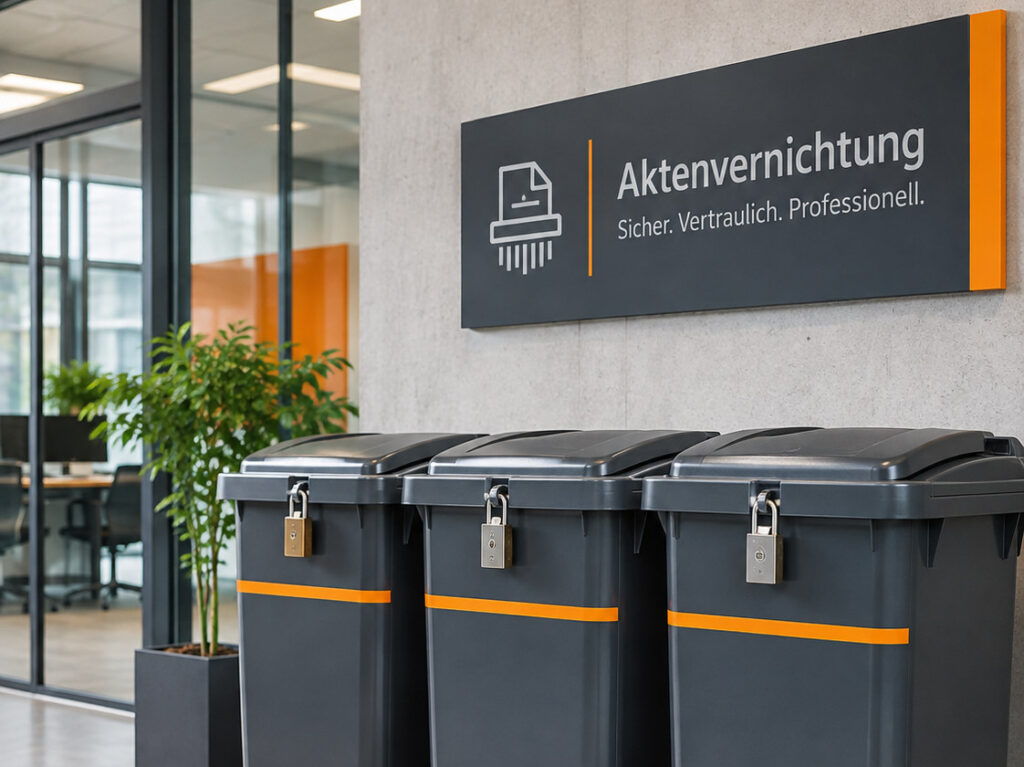
Document Shredding and Security Containers
Companies that specialize in document and data storage media destruction often provide their customers with lockable security containers. These are regularly emptied, replaced, or returned.
With Logistocat, the containers can be assigned to individual customers and locations. Container replacements, pickups, and returns can be documented, ensuring that the whereabouts of the security containers remain traceable.

Reusable Containers in Goods Distribution
Reusable crates and other transport containers are frequently used for regular deliveries to customers. The containers move between the warehouse, vehicles, and customer locations.
logistocat supports the management of these container cycles. Containers that have been issued and returned can be tracked to maintain traceability of inventory and assignments.
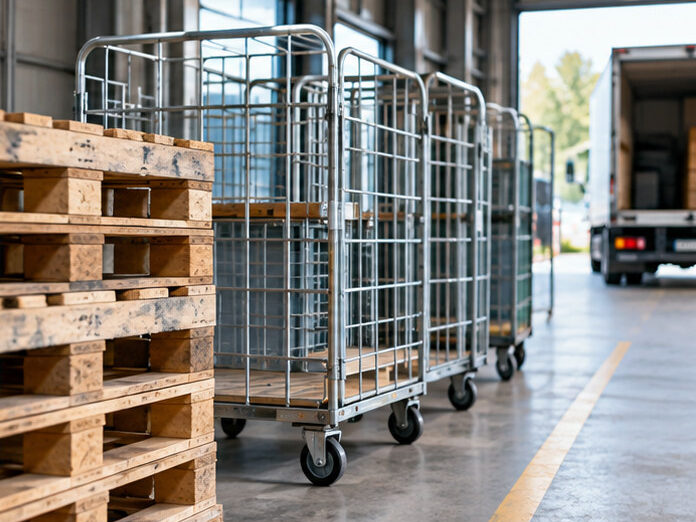
Load-carrying equipment and transport aids
Pallets, roll containers, and other load carriers are moved between different locations as part of daily transportation operations. Without clear tracking, it is often difficult to determine the location of individual transport equipment.
With Logistocat, these assets can be recorded, assigned to locations, and their documented movements tracked. Damaged load carriers can also be marked accordingly and blocked from use.
Container management software that adapts to your processes
Every company organizes its container cycles differently. While some companies focus primarily on managing customer inventories, others require additional container statuses, customized documentation workflows, or tight integration with existing enterprise software. logistocat offers an existing software platform that can be adapted to company-specific requirements through collaborative further development.
Mapping Custom Container Workflows
Different types of containers, customer-specific workflows, and special documentation requirements can be taken into account during further development. This results in a solution that is tailored to actual work processes.
Interfaces to Existing Systems
Data can be exchanged with ERP systems and other business applications via interfaces. The specific information that is transferred and how the integration is carried out depend on the systems in use and the business requirements.
Collaborative Development Instead of Rigid Off-the-Shelf Software
In co-development, companies and MWA Solutions work together on new or enhanced features. The existing Logisticocat platform serves as the starting point, so that not every required feature has to be developed from scratch.
A software platform with growth potential
With Logistocat, companies not only gain access to digital container management features, but also the opportunity to further develop their solution in collaboration with MWA Solutions.
As part of our co-development model, we also offer the option to gain access to the source code for internal use following an agreed-upon collaboration. In this way, we support companies that wish to use their logistics software independently over the long term.
Frequently Asked Questions About Digital Container Management
For which companies is container management software suitable?
Container management software is ideal for companies that manage containers, load carriers, and transport equipment—whether owned by the company or provided to customers. It is particularly useful for regular deliveries, pickups, and container exchanges, such as in document destruction, goods distribution, or waste management logistics. logistocat integrates container management with operational transport processes.
Can we track which containers are located at which customer's site?
Yes. In Logistocat, containers can be assigned to customers and locations. Documented handoffs, returns, and location changes make it possible to track the most recently recorded location and all previous movements. This requires that the corresponding container movements be recorded in the system.
How can we identify containers that haven't been moved for a long time?
In logistocat's map view, you can use a customizable time period to determine which containers have not had any documented movement during that period. For example, this allows you to identify containers that have remained assigned to a single location for several weeks or months. This analysis supports inventory control and the planning of potential returns.
Does the mobile container tracking system work even without an internet connection?
Yes. The logistocat Android app supports offline editing. Drivers can perform scheduled tasks even without an internet connection. The information entered is synchronized with the central system once the connection is restored. This makes mobile editing possible even in locations with limited cell service.
Can damaged or inoperable containers be locked?
Yes. logistocat supports the management of different container statuses and the deactivation of damaged or inoperable containers. This allows such containers to be either included or excluded from further operational use. The information is centrally available to the relevant employees.
Can Logistocat be adapted to our existing processes and IT systems?
Yes. logistocat is a modular software platform that can be customized to individual business processes through collaborative development. Existing ERP and business applications can also be integrated via interfaces. The specific scope of customization and integration is determined based on the respective requirements.
Learn About Container Management with Logistocat
Would you like to manage your container inventory more efficiently, track movements, and integrate container management with your transportation processes?
Get to know Logistocat and see how our software platform can meet your operational needs. Try our publicly accessible demo server or talk to us about your specific container processes.